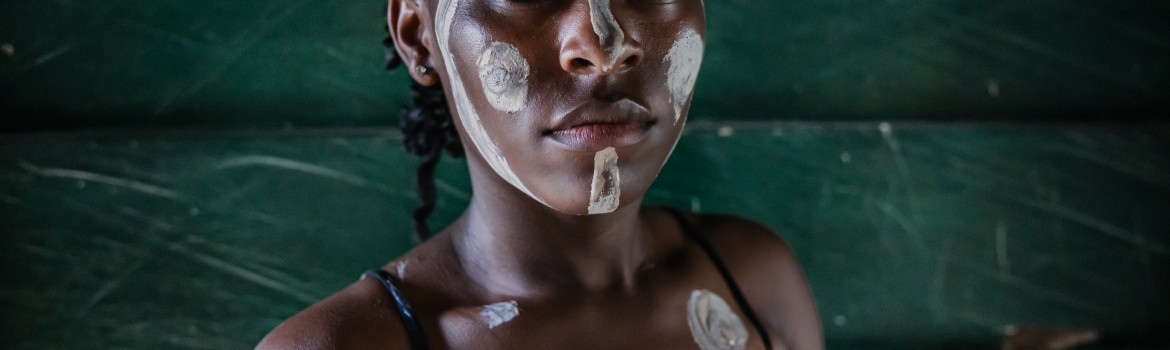
The Bubi people (also known as Bobe, Voove, Ewota) are a Bantu ethnic group of Central Africa who are indigenous to Bioko Island, Equatorial Guinea. The name Bubi comes from the word "Boobe" meaning "Man.
They are renowned for their matrilineal social structure, traditional farming practices centered on crops like yams and malanga, and a rich cultural heritage that includes unique initiation rites and oral traditions. Historically, the Bubi maintained autonomy until Spanish colonization in the 19th century disrupted their governance, leading to forced labor and population decline; as of the 2010s, they number around 50,000–94,000 individuals, facing challenges from assimilation and language shift.
The Bubi language, part of the Niger-Congo family, is spoken primarily by this group and features dialects such as Rebola, Basile, and Banapa, though it is classified as endangered due to the dominance of Spanish and other local languages.
Their society traditionally revolves around clans led by elder women, with spiritual beliefs centered on a supreme being and reverence for sacred sites.



 facebook
 twitter
 google+
 instagram
 flickr
 tumblr
 500px
500px
 Pinterest
 YouTube
 Tik Tok
 Threads